The Ultimate Guide to Luggage
Date: August 6, 2025
For frequent travelers, business professionals, or avid vacationers, choosing the right luggage is essential for a smooth and stress-free journey. But, there's a lot to consider such as the duration of your trips, the go-to essentials you typically pack, and any specific requirements you might have, such as durability or maneuverability.
What to Look for When Buying Luggage?
When shopping for luggage, look for key features such as durable material, weight, size, and maneuverability. Additionally, consider interior organization options, such as compartments and pockets, which can help keep your belongings tidy. As an added bonus, look out for sturdy zippers and reinforced corners.
Types of Luggage
To make the most of your trip, you'll need to start with the type of luggage you prefer: hardside, softside, or wheeled duffel bags. Each of these are best suited for a specific type of journey or style of packing. While there are pros and cons to all three, they're all put through the same rigorous testing process to ensure the durability exceeds the high wear and tear experienced during travel. The common element across Samsonite's luggage is that each come equipped with the wheels and telescoping pull handle to easily maneuver through small spaces.
Hardside Luggage
Hardside luggage is known for its durability and ease of use. These suitcases can be made from polycarbonate, polypropylene, aluminum, or ABS plastic and can withstand the rigors of travel while protecting any fragile keepsakes on the inside. Note: Polycarbonate luggage is usually the lightest.
Beyond these common options, luggage is also made from exotic materials like carbon fiber composites or proprietary materials like Samsonite Roxin® or Curv®. These are significantly lighter than the lightest PC shell available and offer unrivalled strength and durability that few other materials can provide.
Pros:
✓ Durability: The exterior shell materials are extremely durable but also lightweight. They’re tested to withstand multiple types of impact.
✓ Easy to Clean: These are easy to wipe down and keep clean. To learn more on how to keep your luggage clean, visit our guide.
✓ Protection: The rigid exterior shell offers excellent impact protection and water resistance to the contents inside the case.
✓ Security: Most Samsonite hardside luggage comes with an integrated TSA lock, providing better security for your valuables.
✓ Expansion: Almost all hardside luggage can expand, allowing you to significantly increase your packing capacity.
✓ Packing ease: As most hardside open into two halves (from the middle), they’re easier to pack (and unpack) as you can separate the contents on each side
✓ Compliant sizing: The precise dimensions of the hardside luggage follow airline sizing guidelines ensuring minimal surprises at the airport.
Cons:
☓ Limited Exterior Pockets: There are few to no exterior pockets on most hardside luggage. The entire suitcase needs to be opened every time you want to quickly grab something
☓ Flexibility: The exterior shell is rigid and does not flex like softside luggage which tend to be used more for overpacking.
☓ Scuffing and Scratches: Despite the durable hard exterior, it can occasionally get scratched, scuffed, or dented due to rough handling.
☓ Space Requirements: Almost all hardside split open into two halves (from the middle) and hence require more floor space when open. Most softside suitcases have a front opening which requires less floor space to open.
Softside Luggage
Softside luggage comes with one major advantage: multiple exterior pockets for quick access to items like your keys, wallet or passport. Softside is also more flexible than hardside options allowing you to gently overpack and squeeze more into your luggage.
Pros:
✓ Exterior Pockets: All Samsonite softsides have multiple external pockets, providing convenient access to essentials or the freedom to quickly pack something away without needing to open the entire suitcase.
✓ Structural Flexibility: Due to the fabric exterior, softsides can be slightly compressed to fit into tight spaces or flexed to occasionally overpack.
✓ Expansion: Most softside luggage can expand, allowing you to increase your packing capacity.
✓ Compact Space Requirements: Thanks to its front panel opening, softsides requires less floor space to open / use compared to hardside luggage.
✓ Cost-Effective: Softside tend to be more affordable than hardside, making it more budget friendly.
Cons:
☓ Less protective: Due to the fabric construction, softside offer lower protection to fragile items inside the suitcase.
☓ Susceptible to Stains: The fabric exterior is prone to stains and can be more complicated to clean.
☓ Wear and Tear: Over time, the fabric can start fraying or fading.
☓ Less Secure: Due to the fabric exterior, softside are susceptible to tears and punctures from sharp objects and are generally less water-resistant, which can be a drawback in wet conditions.
TYPES OF WHEELS
Two wheels or four? Choosing the right wheel based on maneuverability and the terrain you'll encounter is essential for a seamless journey.
Two-Wheels
Two-wheeled luggage is great for navigating cobblestoned streets or gravel and gives you an edge in terms of stability.
Four-Wheels
Offers a 360-degree range of motion for greater maneuverability through airports, city streets and tiny airplane aisles. A possible downside? Spinner wheels could get stuck in harsher terrains.
Tips for Choosing the Right Luggage
Consider the length of your trip, the nature of your activities, and your travel destinations.
| Carry-On | Checked Luggage | Luggage Sets | |
|---|---|---|---|
| Size Variations | 18"-23" | Medium: 24"-26" / Large: 27"-30"+ | Combination of carry-ons and checked luggage |
| Linear Dimensions | Up to 48 | 50-73 | Varies, based on the set |
| Packing Capacity | Up to 45 liters | 60-120 liters | Varies, based on the set |
| Number of Travel Days | Winter 1-3 / Summer 3-6 days | 1-2 Weeks | 1-4 Weeks |
| Best For | Short trips, no baggage fee | Long trips, carry more items | Versatile packing for various trip lengths |
Helpful Tips:
- When shopping for a carry-on, ensure it's airline-friendly and meets the size restrictions to for a hassle-free boarding process. Check out our Airline Carry-On Guide to help you avoid unexpected fees.
- Pack more into your trip with checked luggage. But be aware of airline weight restrictions and potential fees.
- For longer getaways, a suitcase that can expand gives you the flexibility you need, and ensures you won't be forced to leave any essentials behind.
- Luggage Sets are perfect for travelers who seek out different kinds of adventure and offers a stylish and organized appearance when traveling.
Types of Luggage
To make the most of your trip, you'll need to start with the type of luggage you prefer: hardside, softside, or wheeled duffel bags. Each of these are best suited for a specific type of journey or style of packing. While there are pros and cons to all three, they're all put through the same rigorous testing process to ensure the durability exceeds the high wear and tear experienced during travel. The common element across Samsonite's luggage is that each come equipped with the wheels and telescoping pull handle to easily maneuver through small spaces.
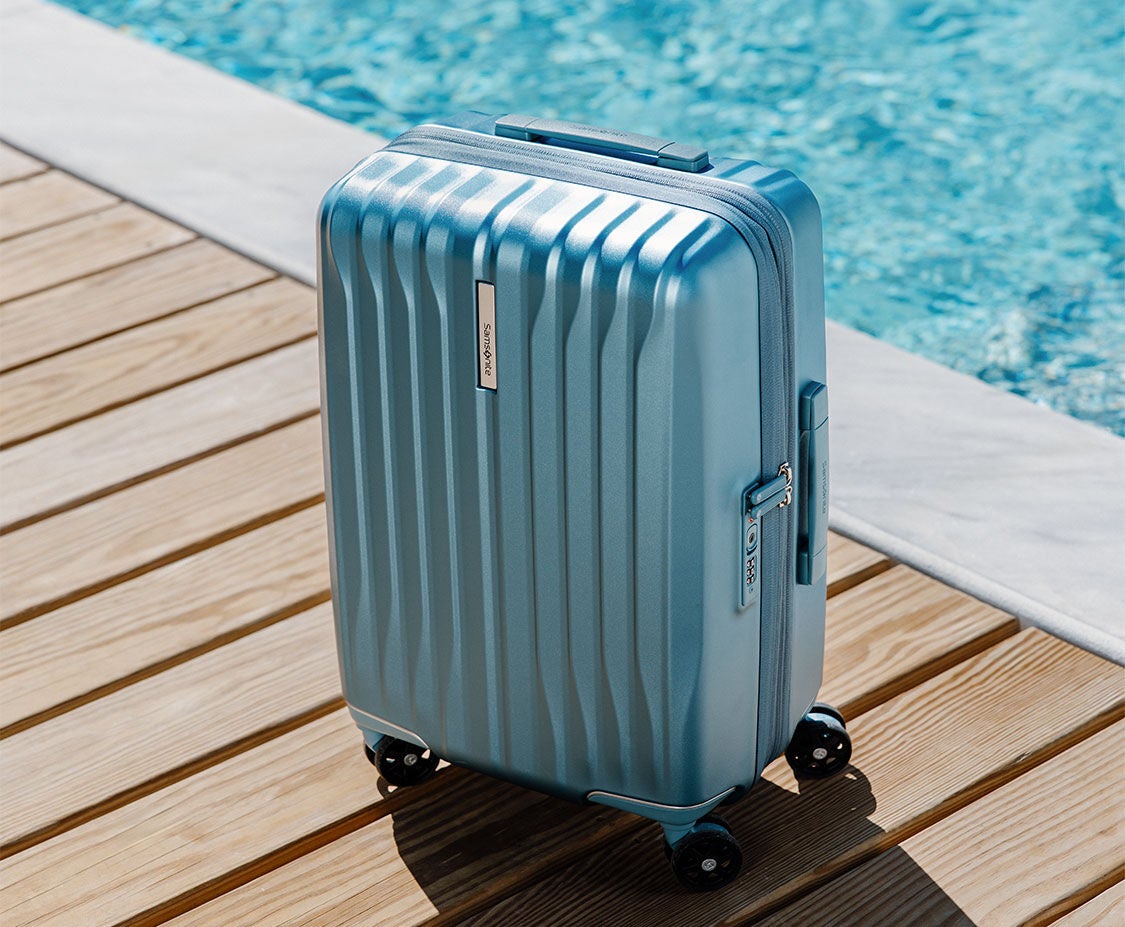
Hardside Luggage
Hardside luggage is known for its durability and ease of use. These suitcases can be made from polycarbonate, polypropylene, aluminum, or ABS plastic and can withstand the rigors of travel while protecting any fragile keepsakes on the inside. Note: Polycarbonate luggage is usually the lightest.
Beyond these common options, luggage is also made from exotic materials like carbon fiber composites or proprietary materials like Samsonite Roxin® or Curv®. These are significantly lighter than the lightest PC shell available and offer unrivalled strength and durability that few other materials can provide.
✓ Durability: The exterior shell materials are extremely durable but also lightweight. They’re tested to withstand multiple types of impact.
✓ Easy to Clean: These are easy to wipe down and keep clean. To learn more on how to keep your luggage clean, visit our guide.
✓ Protection: The rigid exterior shell offers excellent impact protection and water resistance to the contents inside the case.
✓ Security: Most Samsonite hardside luggage comes with an integrated TSA lock, providing better security for your valuables.
✓ Expansion: Almost all hardside luggage can expand, allowing you to significantly increase your packing capacity.
✓ Packing ease: As most hardsides open into two halves (from the middle), they’re easier to pack (and unpack) as you can separate the contents on each side
✓ Compliant sizing: The precise dimensions of the hardside luggage follow airline sizing guidelines ensuring minimal surprises at the airport.
☓ Limited Exterior Pockets: There are few to no exterior pockets on most hardside luggage. The entire suitcase needs to be opened every time you want to quickly grab something
☓ Flexibility: The exterior shell is rigid and does not flex like softside luggage which tend to be used more for overpacking.
☓ Scuffing and Scratches: Despite the durable hard exterior, it can occasionally get scratched, scuffed, or dented due to rough handling.
☓ Space Requirements: Almost all hardside split open into two halves (from the middle) and hence require more floor space when open. Most softside suitcases have a front opening which requires less floor space to open.
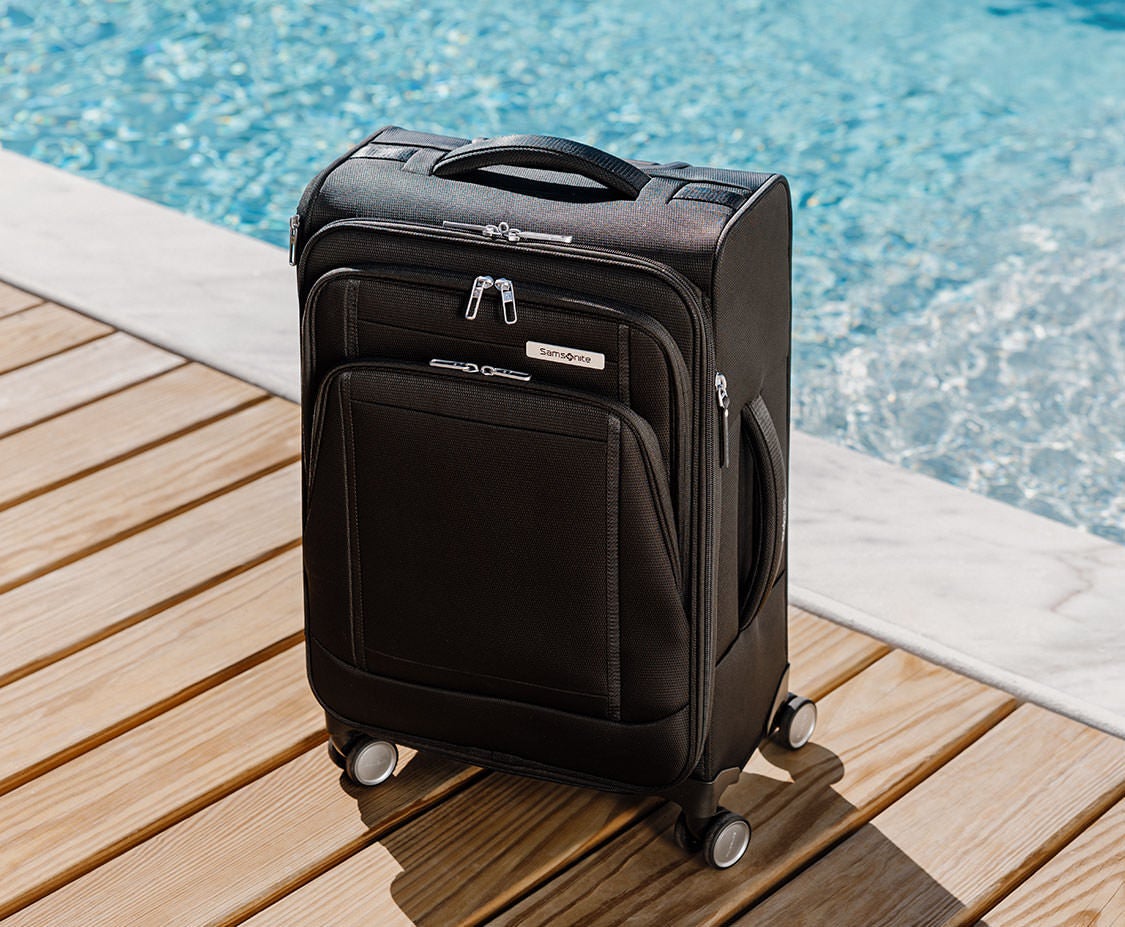
✓ Exterior Pockets: All Samsonite softside have multiple external pockets, providing convenient access to essentials or the freedom to quickly pack something away without needing to open the entire suitcase.
✓ Structural Flexibility: Due to the fabric exterior, softside can be slightly compressed to fit into tight spaces or flexed to occasionally overpack.
✓ Expansion: Most softside luggage can expand, allowing you to increase your packing capacity.
✓ Compact Space Requirements: Thanks to its front panel opening, softside requires less floor space to open / use compared to hardside luggage.
✓ Cost-Effective: Softside tend to be more affordable than hardside, making it more budget friendly.
☓ Less protective: Due to the fabric construction, softside offer lower protection to fragile items inside the suitcase.
☓ Susceptible to Stains: The fabric exterior is prone to stains and can be more complicated to clean.
☓ Wear and Tear: Over time, the fabric can start fraying or fading.
☓ Less Secure: Due to the fabric exterior, softside are susceptible to tears and punctures from sharp objects and are generally less water-resistant, which can be a drawback in wet conditions.
Types of Wheels
Two wheels or four? Choosing the right wheel based on maneuverability and the terrain you'll encounter is essential for a seamless journey.
Two-Wheels
Two-wheeled luggage is great for navigating cobblestoned streets or gravel and gives you an edge in terms of stability.
Best Sellers
Now
$188.99
, discount of
30% Savings
Comp. Value
$269.99
Extra 15% Off 2 or More
- Product Name
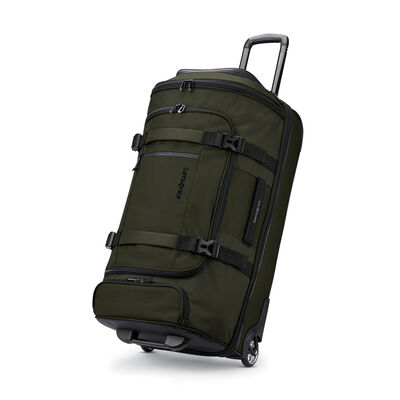
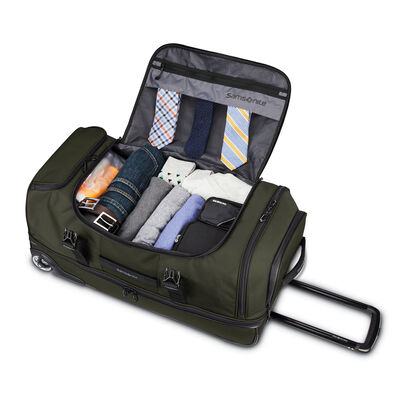
- Detour 29" Wheeled Duffel
- Product Details
- Detour 29" Wheeled Duffel is available in 3 different options. The current selected option Olive is priced at 269.99 USD.
- Product Link
- /luggage/wheeled-duffels/detour-29%22-wheeled-duffel/123492XXXX.html?dwvar_123492XXXX_color=1234921633
Now
$230.99
, discount of
30% Savings
Comp. Value
$329.99
Extra 15% Off 2 or More
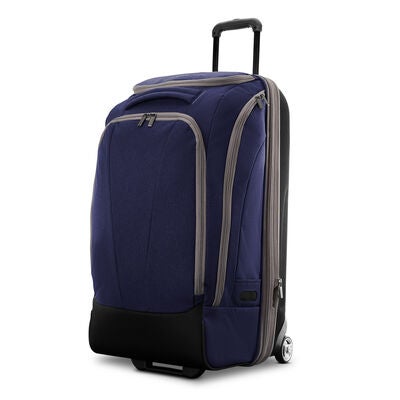
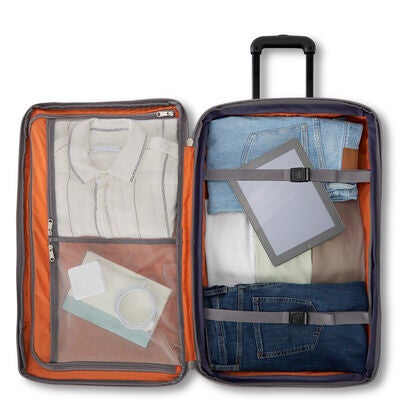
- Product Name
- Mother Lode Large Wheeled Duffel
- Product Details
- Mother Lode Large Wheeled Duffel is available in 3 different options. The current selected option Brushed Indigo is priced at 329.99 USD.
- Product Link
- /luggage/wheeled-duffels/mother-lode-large-wheeled-duffel/154261XXXX.html?dwvar_154261XXXX_color=154261D260
Now
$118.99
, discount of
30% Savings
Comp. Value
$169.99
Extra 15% Off 2 or More
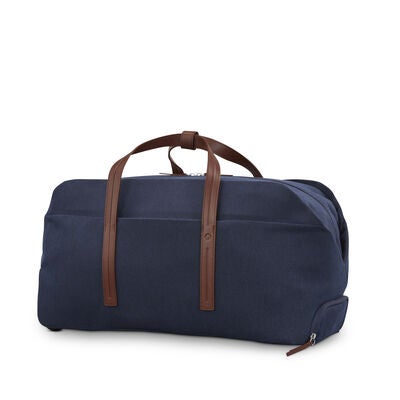
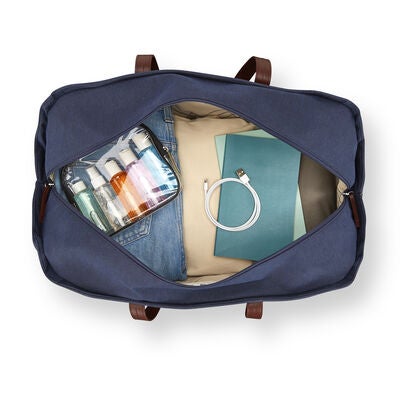
- Product Name
- Virtuosa Wheeled Duffel
- Product Details
- Virtuosa Wheeled Duffel is available in 2 different options. The current selected option Navy is priced at 169.99 USD.
- Product Link
- /luggage/wheeled-duffels/virtuosa-wheeled-duffel/149198XXXX.html?dwvar_149198XXXX_color=1491981596
Now
$188.99
, discount of
30% Savings
Comp. Value
$269.99
Extra 15% Off 2 or More
- Product Name
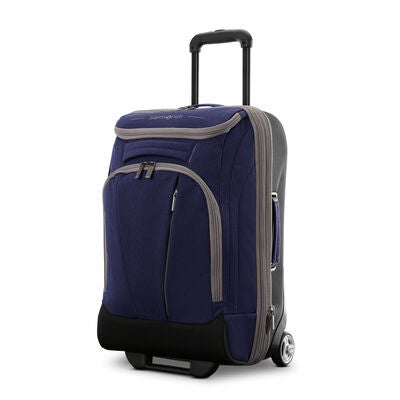
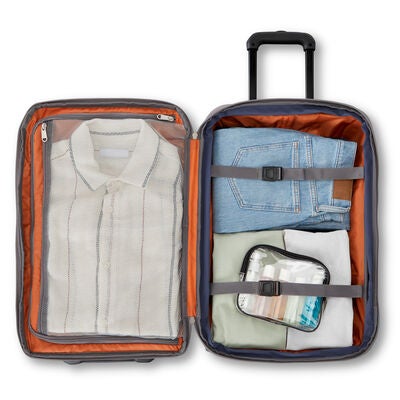
- Mother Lode Carry-On Wheeled Duffel
- Product Details
- Mother Lode Carry-On Wheeled Duffel is available in 2 different options. The current selected option Brushed Indigo is priced at 269.99 USD.
- Product Link
- /luggage/wheeled-duffels/mother-lode-carry-on-wheeled-duffel/154259XXXX.html?dwvar_154259XXXX_color=154259D260
- Product Name
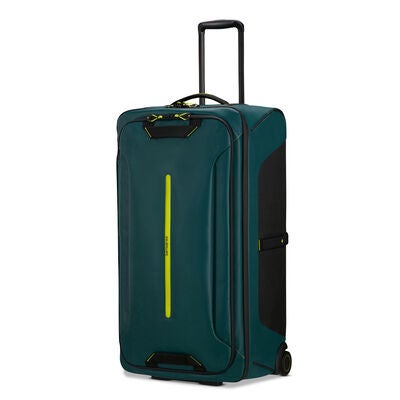
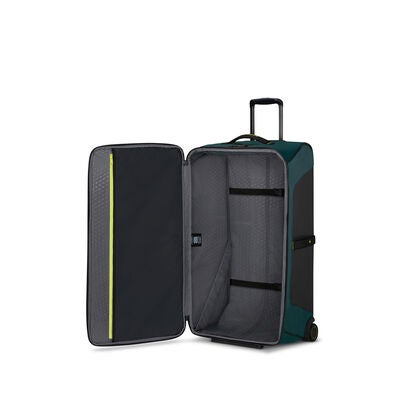
- Prodiver Large Wheeled Duffel
- Product Details
- Prodiver Large Wheeled Duffel is available in 3 different options. The current selected option Dark Teal/Lime is priced at 349.99 USD.
- Product Link
- /luggage/wheeled-duffels/prodiver-large-wheeled-duffel/140884XXXX.html?dwvar_140884XXXX_color=140881A567
Four-Wheels
Offers a 360-degree range of motion for greater maneuverability through airports, city streets and tiny airplane aisles. A possible downside? Spinner wheels could get stuck in harsher terrains.
Best Sellers
Tips for Choosing the Right Luggage
Consider the length of your trip, the nature of your activities, and your travel destinations.
| Carry-On | Checked Luggage | Luggage Sets | |
|---|---|---|---|
| Size Variations | 18"-23" | Medium: 24"-26" / Large: 27"-30"+ | Combination of carry-ons and checked luggage |
| Linear Dimensions | Up to 48 | 50-73 | Varies, based on the set |
| Packing Capacity | Up to 45 liters | 60-120 liters | Varies, based on the set |
| Number of Travel Days | Winter 1-3 / Summer 3-6 days | 1-2 Weeks | 1-4 Weeks |
| Best For | Short trips, no baggage fee | Long trips, carry more items | Versatile packing for various trip lengths |
Helpful Tips:
- When shopping for a carry-on, ensure it's airline-friendly and meets the size restrictions to for a hassle-free boarding process. Check out our Airline Carry-On Guide to help you avoid unexpected fees.
- Pack more into your trip with checked luggage. But be aware of airline weight restrictions and potential fees.
- For longer getaways, a suitcase that can expand gives you the flexibility you need, and ensures you won't be forced to leave any essentials behind.
- Luggage Sets are perfect for travelers who seek out different kinds of adventure and offers a stylish and organized appearance when traveling.
What else can be considered a carry-on?
Backpacks and duffels offer a versatile and convenient alternative, especially if you prefer a hands-free approach to travel. Many of our backpacks, bags, and duffels meet the carry-on size requirements, making them perfect for navigating busy airports and cramped overhead compartments. To review airline size requirements, view our Airline Carry-On Guide.
How to properly store your luggage?
When your luggage isn't accompanying you on your adventures, it's essential to store it properly to maintain its condition. Store it in a cool, dry place away from direct sunlight to prevent damage. Additionally, consider investing in luggage covers to shield your bags from dust and damage while they're not in use. Some of our luggage pieces are crafted to nest within each other, saving you precious storage space. For more information on how to properly care for your luggage, click here.
What is the 3-1-1 rule for luggage?
The 3-1-1 rule is a TSA regulation for carrying liquids in your carry-on luggage. It helps ensure a smooth and efficient security screening process. This rule applies to liquids, gels, and aerosols, including items like toothpaste, shampoo, conditioner, mouthwash, and lotion 1. Following the 3-1-1 rule helps you avoid delays and ensures compliance with security regulations. Here’s what it entails:
1. Each liquid must be in a container of 3.4 ounces (100 milliliters) or less.
2. All containers must be placed inside one quart-sized clear plastic bag.
3. Each passenger is allowed one plastic bag.
What identification should you put on your luggage?
Properly identifying your luggage is crucial for ensuring it doesn't get lost and can be easily retrieved if it does. Attach a durable luggage tag with your name, phone number, and email address, but avoid putting your home address for security reasons. Adding unique identifiers like colorful ribbons, stickers, or handle wraps can make your luggage stand out on the carousel. For added security, consider investing in a GPS luggage tracker or Apple AirTag™ to help locate your bag if it gets lost or stolen. These steps can significantly reduce the chances of your luggage being misplaced and increase the likelihood of a quick recovery if it does go missing.